





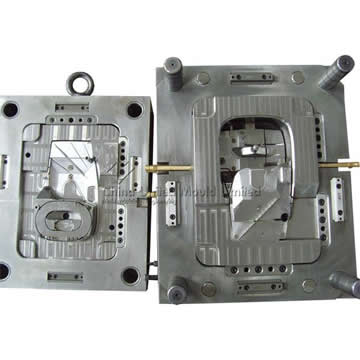
How to select a Plastic injection mould supplier?
The major reason that American and
European companies source plastic injection moulds in China is price, at the
end of the day that is the major factor. However if we want to have a feel good
discussion and ask what to look for when selecting a Chinese injection mould
supplier we can look for the following:
-
References — Get it from
them and do your homework
- Origin of Tool Steel
-
Capital investment in
shop and equipment — Is it a dive? -
In place (established
method) project plan that shows every aspect of build and give updates - Quality Systems
- Validation Systems
-
Knowledge of your product
— Have they done this before? -
How much capability do
they have — Can they do everything in-house? -
Capacity and what is it
at the moment you are placing your P.O. -
Are they able to service
you globally?
How to be a good troubleshooter of injection moulding?
I was an injection moulding trouble
shooter for eight years, and in my job today I come across good and bad ones
all the time. You can see very quickly which is which I have seen a lot of
articles about taking people with boat loads of experience, in principal I
would agree, but be cautious that the experience is not blinding the person to
think they know it all.
The big part missed is a good communicator. The problem being an injection moulding
trouble shooter is you can be called in to solve a problem and by fixing it the
people originally working on can be put out joint, the trouble shooter can be
seen as critic of their work quality. So the best injection moulding
troubleshooting expert is someone who can work with the people to solve the
problem and not need to be seen as the hero taking limelight.
How to minimize sink marks of injection moulded parts?
Minimizing of sink marks can be achieved
by following proper part design. The sink marks will not be eliminated if you
have any ribs or structural features behind the ‘A’ surface. But with proper
part design they can be minimized to a point that they are not visible.
You will never cover sink marks up with the paint, they will appear worse than
they do on the plastic part. There are a few good way to check for sink on a
part before painting. these are:
-
Project a grid pattern of
bright lines on the part, using an overhead projector, distortion in the
grid pattern shows sinks easily. -
Wipe the part with
Alcohol and observe the drying pattern. Sink areas take longer to dry.
How to Increase/Decrease Injection Moulding Shrinkage?
Injection moulding processing can affect
shrinkage, but not as much as fillers.
Increase shrinkage: shorter cooling time in injection mould. Higher mould
temperature. Greater product thickness. Higher resin melt temperature during
injection. More plasticizer in resin. Less injection speed. Lesser packing /
holding pressure and volume.
Decrease shrinkage: longer cooling time in the injection mould. Lower mould
temperature. Thinner product walls. Lower resin melt temperature during
injection. Greater injection speed. Greater packing / holding pressure and
volume. Fillers such at talc, glass beads, or glass fibers (more anisotropic
shrinkage with fibers).
Injection rates, packing, and mould temperatures can significantly affect moulded-in
stress or allow voids and sink marks. Moulded-in stress can affect warp,
solvent sensitivity, dimensional stability, and impact resistance; so, these
tertiary effects need to be considered.
The reasons of warpage in injection moulding
Warpage is usually caused by moulded-in
stresses. The issue of warpage is related to being a semi crystalline material,
HDPE, being semi crystalline polymer, will have differential shrinkage along
and across the flow leading to warpage. It is difficult to eliminate this
problem just by optimizing processing parameter. If use of multiple gates is
possible, that might help multidirectional flow leading to lesser warpage.
The two areas that will have greatest affect are injection mould temperature
and gating being both location and type. Not knowing configuration or flow
difficult to give specific advice, but think of the part on a molecular scale.
Imagine the surface of part being interconnected crystals with cooling starting
at coldest surface of injection mould which will be multiple points and
spreading out in a circular shape all within fractions of a second. You want
the coldest surface possible and repeatable and a flow front that fills mould
as evenly as possible. The more even the flow front in relation to part
configuration from one side across to other and a plastic injection mould
surface temperature that is a uniform temperature will minimize warp. There are
some design tricks that would also minimize warpage but you may past that
point. As to type of gate, as large as possible so you are not adding heat
through shear. Also monitor melt temp at nozzle, looking for lowest temp that
will enable complete mould fill.
How to predict injection mould shrinkage?
Injection mould technologies seminars
may help mould companies to educate their people. But I think that each
injection mould shrinkage problem you face in real life is caused by too many
effects that one rarely can keep track of it.
-
One thing you always
should keep an eye on is the crystallization of materials which is
responsible for the biggest part of the shrinkage. And this
crystallization is not just influenced by the process (PVT- is one head
point). -
But also by the
limitations made by the machine and the injection mould (cooling
time–>crystallization rate). -
Also the fillers in a
material can have so much influence on crystallization. -
Also keep in mind that
post process shrinkage also causes crystallization and thus injection mould
shrinkage. -
Not every part has
uniform wall thickness, this will cause ununiformed shrinkage occurs. -
Also so-called amorphous
thermoplastics are not 100 % amorphous und thus can shrink depending on
the overall conditions named above.
How to choose mould flow software, Autodesk or Mouldex?
Both are highly developed and very
capable products. Either one is much, much better than no process calculation
at all. In that sense, you can’t go wrong whichever one you choose. That’s just
as well, because it is going to be difficult to answer the question in a truly
informed manner. There can be few if any people who are equally fluent and
experienced in both systems, under industrial conditions.
A niche product such as injection moulding process simulation needs support by
industry experts who can hold their own on the factory floor as well as at the
keyboard. I think Autodesk’s CAD reseller channel struggles to deliver that. I
am just an onlooker now, but I get the sense that Mouldflow has stalled, and
all the momentum is with Mouldex. Certainly, over the last few years, I have
read and seen quite a lot about Mouldex and almost nothing about Mouldflow. It
is just a niche for Autodesk but it’s core business for Mouldex.
Injection Mould Venting Problem
Venting can be one of the most important
parts of an injection moulded product. Many engineering materials like PBT
(Polybutylene terephthalate) have a tendency of out-gassing. The best practices
that I have to date are:
-
Add 10mm wide vents
spaced 30mm from each other all the way around parting line. -
Always follow the
recommendations of the material company for vent depth. -
If the product has a 50mm
or larger core out the injection mould must be vented through the ejector
plate, which means that you must drill through the core side (without
hitting any water lines etc.) I usually use a 5mm or 1/4″ drill bit
to do so. -
Always vent to
atmosphere. -
Polish the vents and vent
channels. This makes the vent self-cleaning. It also allows the gases to
escape much better.
A really old trick to ascertain whether
the injection mould has an inherent venting problem or not, and this trick is
somewhat dependent upon injection mould construction so must be evaluated as
applicable on a case by case basis (more about this at the end) is to use
shipping tape, or masking tape, depending upon the gap desired laid across the
injection mould major parting line to artificially “spread” the mould
and create a vent gap. Evaluate the fill in the taped v non taped shots without
making changes to the injection moulding process settings.
How to cooperate with China injection mould
manufacturers?
Over the years we have been taken
advantages of with the low cost of plastic injection mould manufacturing in
China. You get what you pay for. I have heard of an injection mould cracking in
half just last year from China, water poring out of it in the press. As an
injection mould maker back in the 80’s and 90’s we started to see import steel
making its way to our machines. We could tell on the CNC’s or polishing we were
not getting what we bargained for. After heat treat OMG, warp. We use to say
they put old “bed springs” in the alloy mix. When drilling a hole in
this steel it would not be constant feed rate by hand, you could feel the drill
push easy then hard etc. So we had to be very precise in ordering our plastic
injection moulds with certification. We ordered 4 large injection moulds from a
Chinese manufacturer in 2004, the heat treat was horrible, we did not get our
certification, it looked fake. Someone was trying to pull a fast one. I
hardness tested several blocks from the plastic injection moulds, not good. We
spent approx $450,000 for those injection moulds back in 2004 and we tried to
outsource and handle the engineering real close. We tried to do everything real
and it back fired. These injection moulds were for electrical components and
tolerances on my parts were critical, 4 to 8 cavity moulds, the quality was
just not there. Glass filled nylon wore down these plastic injection mould in 8
months, we had to retool.
Considerations of outsourcing injection mould to China
If you plan to make moulds outside of
the United States, and you don’t have an international patent. Remember you
have no legal means of stopping someone in China from building a second set of
injection moulds and producing your product and selling it in say Australia,
Japan or Europe, quite possibly before you roll it out in the United States.
A lot of problems come from communication and working habits from my experience
actually. Many injection mould manufacturers in China can’t speak and listen
English very well, it may be the biggest reason of causing some problems. If
communication no problem, Chinese manufacturers are very much willing to do
everything possible for their customers.
The fact of China plastic injection mould makers
Chinese injection moulds cut major
corners on water, mould steels, unless you really get after them to use good mould
steels. I have seen Chinese plastic injection moulds that literally warp in the
press because their injection moulds are the softness of lead. I have seen
well-made Chinese moulds, but again, the materials used have been sub-par. The
delay in communications is also an ongoing problem. That’s one reason I use
America, UK or Italy over China — never have to worry about any of the things
previously mentioned. The only reason that Chinese injection moulds remain more
competitively priced is the fact that the country pegs its currency to the
dollar, so you never see the true cost. In the near future, the Chinese will
not be able to continue pegging their currency to US dollar especially when the
dollar is getting trashed by our own government. Because of this weak dollar
policy, it makes everyone except China very expensive. Yet, for our European
friends, it makes US made stuff cost competitive. However, even with our
virtually worthless currency, I still get 25-30% less costly tooling in
Portugal.